The Art of Negotiating with Suppliers
Negotiating with Suppliers (8 General Points) The art of negotiation comes in useful in all aspects of life and is a skill many people struggle with. If you are an…

Negotiating with Suppliers (8 General Points) The art of negotiation comes in useful in all aspects of life and is a skill many people struggle with. If you are an…
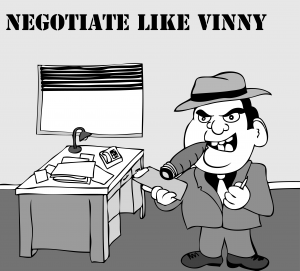 Negotiating aka haggling does come easier for some people. For example, my parents are from Europe and although I was born and raised in North America, my family was comfortable negotiating on both major and minor purchases. This was part of their upbringing and they are more accustomed to this form of trade or commerce. As a result of having witnessed this growing up they managed to instill these traits in all their children.
Looking back, after over 30 years in the Materials Management field, I have come to realize becoming a Purchasing Agent had much to do with my upbringing. My parents used every opportunity to expose their children to real life financial transactions and nurtured the importance of achieving the best possible product at the best possible price. To be honest, for our family, negotiating an acceptable unit price on a major expenditure was a necessity.
One of these real life transactions — my Father had me actively involved in the negotiation of my first major purchase. An automobile and at the tender age of 16. Yes I had a car, which I bought and paid for with my own hard earned cash!
Watching my Father grind the Car Salesman sitting on the other side of the desk was an experience or life lesson I will never forget. On one side you have an eager yet scared Buyer (me cause I had to make car payments), on the other side is the wily sales manager. Representing the eager buyer was (more…)
 Part 2 of 4: How to Improve Your RFP
In part one, we touched on areas on how to improve your request for proposal. We mentioned mitigating risks, improving bid responses and clarity. In part two, we will provide further amplification to these three areas.
Mitigating Risks: To reduce risk or to reduce liability against your organization we strongly recommend you involve legal counsel prior to issuing any formal RFP or RFQ documentation. Be sensible, if the proposal has a $5,000 budget you might wish to pass on the legal counsel review, however, if the proposal has a considerably larger value and or an inherent risk, then you should consider this option. Having provided this caveat, we are also assuming you are using a quality template that has been reviewed and approved by your organization in the first place.
Other ways to limit liability is to ensure your instructions to bidders are consistent and do not contradict within the proposal. An example, would be a technical specification being at odds in two different areas of your document. Another example, is an extension to the submission date. If you indicate the tenders or proposals must be received by 3:00 PM PST on August 4, 2015, then you are legally bound to honor this timeline. Many organizations date and time-stamp proposals at time of receipt. This log and control function is a form of mitigating risk in the event they are challenged. If you issue an addendum or extension to a deadline then this must be provided to all bidders.
Risks and liabilities are a very dry topic and we could spend a considerable amount of time on this subject alone but we hope the above gives you some sense on how to avoid getting embroiled in a legal challenge. Lets move on to improving your bid responses.